Untangling Cardiovascular Disease (Parts 1–5)

This series is dedicated to my brother Jeff — taken by a heart attack at 59. No warning. No goodbye. Just gone.

That loss is what drove me to spend months digging into the research on cardiovascular disease, and what I found should be far better known than it is.

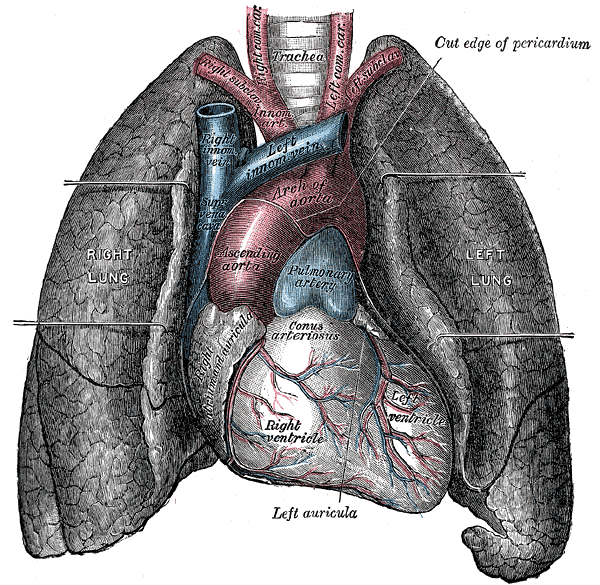
Cardiovascular disease kills more people than anything else on the planet. And yet the standard toolkit — statins, blood pressure medications, low-fat diets — isn’t moving the needle the way it should. The problem isn’t a lack of effort. It’s that we’re looking in the wrong places.

There are interventions with striking evidence behind them that most cardiologists have never discussed with their patients: how vitamin K2 controls calcium metabolism — keeping it in the bones and out of the arteries — along with enzymes that can at least partially clear arterial plaque, and approaches to difficult cases that don’t dead-end at “we don’t know.”

From the biology of how vessels break down to what can actually reverse the damage, this five-part series lays it all out — the science, the evidence, and the honest conversation that cardiologists haven’t been having, because they simply don’t know about it.

Read the full series on ZeroSpin

ZeroSpin is my newsletter on the good, the bad, and the ugly of medicine, politics, and industry. Subscribe free here to get every new series in your inbox.

Dr. Steven Phillips Speaking at Health and Human Services Lyme Disease Roundtable — December 2025

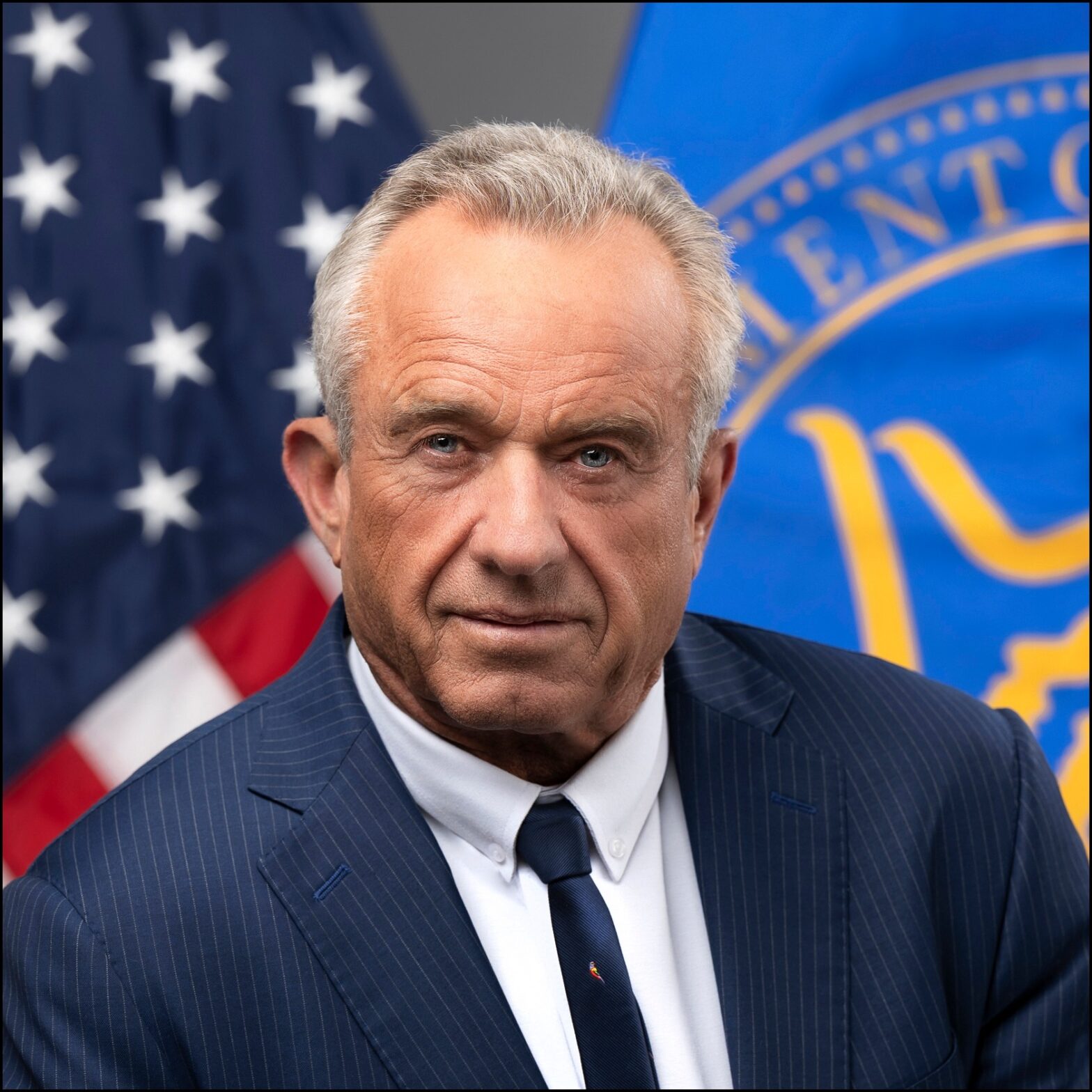
Dr. Steven Phillips was invited to take part in a national Lyme disease roundtable convened and moderated by U.S. Secretary of Health and Human Services Robert F. Kennedy, Jr. The historic gathering took place in Washington, DC on December 15, 2025. It brought together clinicians and researchers to confront the diagnostic and clinical challenges of Lyme and other vector-borne illness, and marked a milestone in federal recognition of Lyme disease as a serious public-health priority.

An internationally recognized expert in chronic illness and co-author of Chronic, Dr. Phillips joined a distinguished group of federal leaders and experts, including Centers for Medicare & Medicaid Services Administrator Dr. Mehmet Oz and National Institutes of Health Director Jay Bhattacharya, MD. At the roundtable, HHS announced the renewal of the LymeX Innovation Accelerator — a public-private partnership with the Steven & Alexandra Cohen Foundation — including a $10 million initiative to advance AI-driven diagnostic tools for earlier, more accurate detection of Lyme disease.

Dr. Phillips was honored to contribute his clinical experience to this landmark national effort, and remains dedicated to ensuring patients with Lyme and other vector-borne illnesses receive the recognition, research, and care they deserve.

Check Out ZeroSpin

My unapologetic insights into the good, the bad, and the ugly sides of medical science, politics, and industry. From the cool and hopeful, to the shameful and corrupt—the truth sets us free.

Sign up now!

Chronic featured in NY Times

The NY Times discusses Dr. Phillips’s new book about chronic illness

By Ross Douthat

As it happens, the minority view — that chronic Lyme is actually a chronic infection, not just an autoimmune response or a psychosomatic malady — has a new defense this month: a book called “Chronic: The Hidden Cause of the Autoimmune Pandemic and How to Get Better Again,” written by Dr. Steven Phillips, a Lyme practitioner and researcher, and one of his patients, the musician Dana Parish.

The book makes the case that the spread of what the authors call Lyme+, an array of tick-borne pathogens that often infect patients simultaneously, is responsible not just for the more than 400,000 cases of Lyme disease diagnosed each year in the United States but also for an unknown number of chronic infections beyond that — undiagnosed or misdiagnosed and left untreated because of a combination of testing failures, institutional bias and the horrible complexity of the diseases themselves.

Then further, they argue that most of these cases can be treated effectively. Many people who are told they have a condition that can only be managed, not eliminated — to say nothing of the people told “It’s all in your head” — could claw back toward normalcy, if not always perfect health, with a long-term regimen of oral antibiotics and a doctor who’s willing to work with them to figure out which drug combination works.

Read more >

The NY Post names Chronic as one of “The best new books to read”

Steven Phillips and Dana Parish (nonfiction, Houghton Mifflin Harcourt)
Dr. Phillips was a renowned physician when he himself became a patient — with a mystery illness that no one seemed able to diagnose. The same happened to Dana Parish. “Chronic” is a look at the pandemic of chronic conditions caused by common infections. A fascinating look at an area of health that is often misunderstood.

Read more >

Dr. Phillips & Dana Parish: keynote speakers at LymeMind

On October 10, 2020, Dr. Phillips and Dana Parish led a discussion about the topics in their upcoming book, “Chronic: The Hidden Cause of Autoimmune Pandemic and How to Get Healthy Again” at the 5th Annual LymeMIND Virtual Conference. Check out the full event schedule at lymemind.org/agenda

The LymeMIND team, based at the Icahn School of Medicine at Mount Sinai, is made up of diverse experts in the areas of computational biology, epidemiology, software engineering, systems biology, and Lyme disease research.

Dr. Phillips’ piece on the truth about chronic Lyme is now up on NBC News.

Lyme disease patients fight for their lives while academics fight each other. That’s just wrong.

The number of people who get Lyme disease compared to how little research on it is ever funded is staggering. Scientific bias is hurting people.

For patients, there is often nothing more soul-crushing than being inexplicably sick with doctor after doctor having no answers, or getting the wrong diagnosis and being led down the wrong path with the wrong drugs. But for patients with Lyme disease, either or both is common, because its every aspect has been so bitterly contested by scientists that the conversation has been sourly referred to as “The Lyme Wars” in medical journals.

read the article

Dr. Phillips’ article is published in Norway’s largest newspaper

Linked below is the piece Dr. Phillips wrote, which was published in Norway’s largest newspaper, Aftenposten meninger (it can be translated from Norwegian to English on google translate). It was written in response to a piece by a Norwegian doctor, who makes a series of incorrect claims, including that chronic Lyme is as a pseudo-diagnosis and that researchers who have found evidence supporting chronic Lyme are pseudo-scientific.

read the article

A Huge Thank You to Bay Area Lyme Foundation for honoring me with a coveted Emerging Leader Award!

This $100,000 scientific grant has allowed us to go forward with the much needed initial proof of concept testing of our new drug to combat Lyme and bartonella and research is underway. Bay Area Lyme Foundation is an amazing organization and we couldn’t be more grateful! I’m working alongside Dr. Neil Spector of Duke University, Dr. Jayakumar Rajadas of Stanford University, Dr. Ed Breitschwerdt and his team from Galaxy Diagnostics and NC State, Dana Parish, and too many others to list here. We’re developing a drug for the treatment of bartonella and Lyme, made possible by this joint-development effort involving some of the smartest folks from academia, the private sector, and the non-profit world.

Joint venture between Duke University, Johns Hopkins University, and Tulane University. This project was fully funded by the Steven and Alexandra Cohen Foundation, which is a stellar organization.  The goal is to use a specialized high-throughput proteomics platform to find new drugs to treat Lyme and Bartonella.  It’s the same precision medicine technology used to find drugs for cancer and HIV, only this time it’s finally turned toward eradicating Lyme and Bartonella.  The advantage of this type of research is that it results in highly specific, smart bombs that keenly target these organisms but do not destroy beneficial microbes, for example in our GI tract.  At the same time, we can engineer the results so as to minimize any harm to human cells.  We already have lots of drug candidates and have now moved past the initial steps.